

New
The World’s First Computer Programmer
Ada Lovelace was born on December 10, 1815, in England. She was the daughter of the poet Lord Byron, a leading figure of the Romantic movement and one of the most influential poets in British literary history.
In 1833, she met the British mathematician Charles Babbage and became fascinated by his ideas surrounding the Analytical Engine, a machine designed to perform complex calculations. In 1842, the mathematician Luigi (Louis) Menabrea published a memoir describing the Analytical Engine. Ada later translated the text from French into English for Babbage, adding extensive notes of her own. Within these annotations, she outlined a specific method for executing algorithms—now widely recognized as the first algorithm in the history of computing.
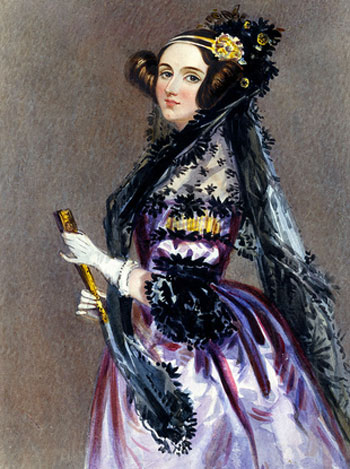
A portrait of Ada Lovelace as depicted in a drawing by Alfred Edward Chalon in 1840. (Photo: Huffington Post)
Charles Babbage famously referred to Ada as “the Enchantress of Numbers.” Ada, for her part, described herself as a metaphysician and characterized her way of thinking as a “poetical science,” blending mathematics with imagination and richly expressive metaphors.
Ada Lovelace was also among the earliest thinkers to speculate about artificial intelligence. While she acknowledged the extraordinary capabilities of machines, she remained skeptical about their autonomy. She once wrote: “The Analytical Engine has no pretensions whatever to originate anything. It can do whatever we know how to order it to perform.” To this day, her statement continues to fuel debate within the scientific community.
According to Ada’s writings, she recognized early on the potential for computer-generated music. Before falling ill, she wrote to her mother about her research into the relationship between music and mathematics. She even anticipated that, one day, the Analytical Engine might be used to compose complex musical pieces.
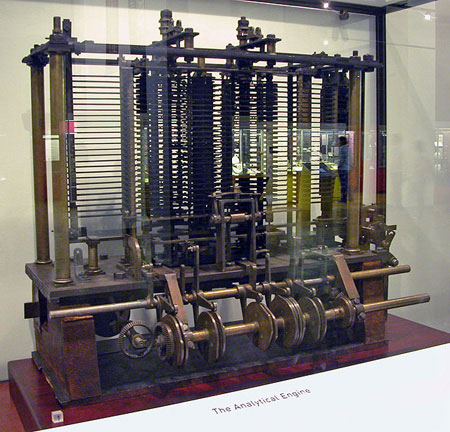
A prototype of the Analytical Engine is on display at the Science Museum in London, England.
Ada’s mother personally taught her mathematics and science from an early age—an uncommon practice at a time when women were generally discouraged from engaging in such subjects. Initially, this rigorous education was intended as a preventative measure against what her mother feared might be a hereditary tendency toward mental instability inherited from her father.
Ada also explored the possibility of human flight. She studied the anatomy of birds and conducted numerous experiments before producing an illustrated manuscript titled Flyology.
In her twenties, Ada joined a group of male friends in an attempt to develop a mathematical model for horse-racing bets. After repeated failures, she fell deeply into debt and secretly pawned her husband’s family jewelry to cover her losses.
Like her father, Ada Lovelace died young, at the age of 36. Doctors at the time diagnosed her with cervical cancer. She was laid to rest beside the father she never met, yet with whom she always felt a profound and enduring connection.